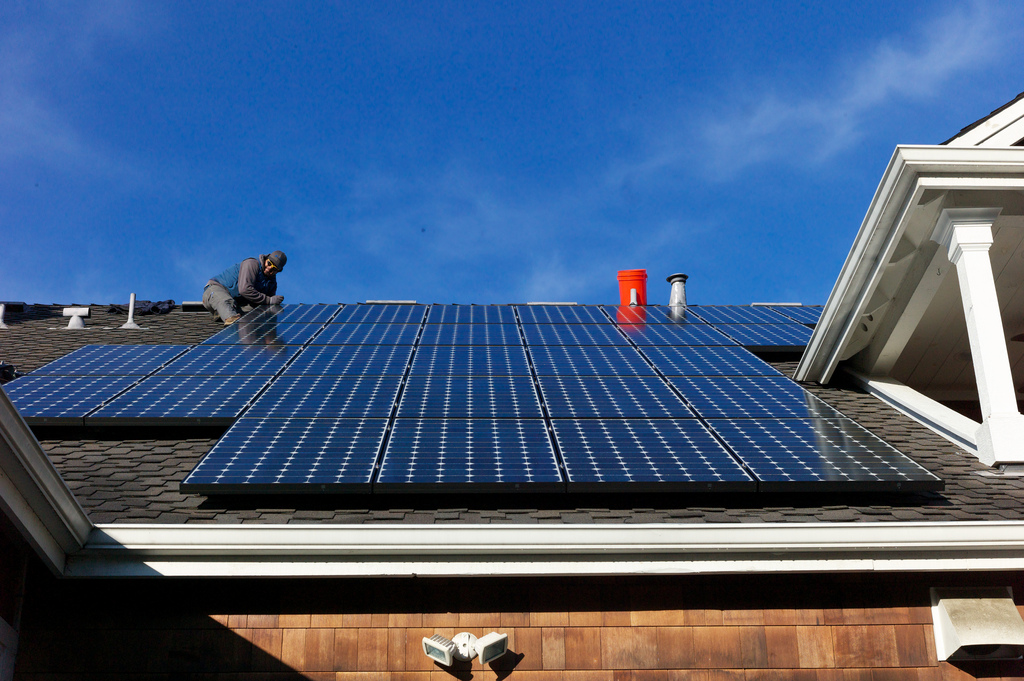
A roof has always served one primary purpose: protecting a home from the elements.
But in 2026, many homeowners across the United States are asking a different question:
What if your roof could do more?
Imagine waking up each morning knowing that the very surface protecting your family is also generating clean electricity, helping offset utility costs, and potentially increasing your home's value.
That vision is no longer futuristic. It has become a practical reality through the growing adoption of the Solar Roof.
Unlike traditional rooftop solar panels mounted above existing shingles, modern solar roofs integrate energy generation directly into roofing materials. The result is a cleaner appearance, a more streamlined design, and a roofing system that works harder for homeowners every day.
As energy prices continue to fluctuate and homeowners become increasingly focused on sustainability, solar roofing solutions have emerged as one of the most discussed home improvement investments of the decade.
This guide explores costs, benefits, leading brands, installation considerations, real-world experiences, and emerging trends shaping the Solar Roof market in 2026.
Understanding How a Solar Roof Works
At its core, a Solar Roof combines two essential functions:
Weather protection
Solar energy generation
Instead of installing large photovoltaic panels on top of an existing roof, solar roof systems incorporate photovoltaic technology directly into roofing tiles or shingles.
When sunlight reaches these materials, solar cells convert solar radiation into usable electricity.
The electricity generated can be:
Used immediately within the home
Stored in a battery system
Exported back to the electrical grid (where local regulations allow)
Many modern systems are paired with smart energy management software that helps homeowners monitor production and consumption in real time.
The appeal extends beyond aesthetics. Because the roofing material itself generates power, homeowners can achieve a more integrated appearance while maintaining the functional benefits of renewable energy generation.
Deep Dive: Costs of a Solar Roof in 2026
One of the first questions homeowners ask is straightforward:
How much does a Solar Roof cost?
The answer depends on several factors:
Home Size
Larger homes require more roofing material and additional solar-generating components.
Roof Complexity
Multiple roof angles, dormers, chimneys, skylights, and architectural features can increase installation complexity and labor requirements.
Local Labor Costs
Installation costs vary significantly across regions of the United States.
Energy Goals
A homeowner seeking to offset 30% of electricity usage will require a different system size than someone pursuing near-total energy independence.
Battery Storage
Adding energy storage systems can substantially increase upfront investment while improving resilience during outages.
According to industry analyses, integrated solar roofing systems generally cost more upfront than conventional asphalt roofing combined with standard solar panels.
However, cost comparisons should consider:
Roofing replacement expenses
Electricity savings over time
Potential tax incentives
Property value impacts
Long-term maintenance considerations
Homeowners evaluating a Solar Roof should focus on lifecycle value rather than installation price alone.
Source:
U.S. Department of Energy – Homeowner's Guide to Going Solar
National Renewable Energy Laboratory – Residential Solar Research
Solar Energy Industries Association – Residential Solar Market Insights
Lawrence Berkeley National Laboratory – Solar and Home Values Research
Practical Benefits Homeowners Are Seeing
The appeal of a Solar Roof extends beyond monthly utility savings.
Enhanced Curb Appeal
Traditional solar installations have become increasingly attractive over the years, but many homeowners still prefer a roof that appears seamless.
Integrated solar shingles and tiles provide a more uniform architectural appearance.
Reduced Utility Dependence
Every kilowatt-hour generated by a Solar Roof is energy that may not need to be purchased from the utility provider.
This can help homeowners better manage long-term energy costs.
Environmental Impact
Residential electricity generation remains a major contributor to greenhouse gas emissions in many regions.
By generating renewable electricity on-site, homeowners can reduce their carbon footprint over the life of the system.
Potential Property Value Benefits
Research has suggested that energy-efficient upgrades can positively influence home valuation in certain markets.
While outcomes vary by region and market conditions, many buyers increasingly consider energy performance when evaluating homes.
Quiet Operation
Unlike generators or other mechanical systems, solar roofs operate silently.
Most homeowners quickly forget the system is there—except when reviewing utility bills.
Real-World Example: A Family's Solar Roof Journey
When Michael and Sarah purchased their suburban home in Colorado, they knew the roof would eventually require replacement.
The original asphalt shingles had reached the latter stages of their lifespan, and rising utility bills were becoming a growing concern.
Initially, they considered replacing the roof and installing conventional solar panels later.
However, after comparing long-term costs, they decided to explore integrated solar roofing.
The decision wasn't made overnight.
They reviewed proposals from multiple contractors, analyzed projected energy production, researched incentives, and spoke with neighbors who had already adopted solar technology.
The installation process required planning, but once completed, they noticed several changes:
Improved home aesthetics
Greater awareness of energy usage
Reduced dependence on grid electricity
Increased confidence regarding future energy costs
Their experience reflects a common pattern among homeowners: the value of a Solar Roof often extends beyond financial calculations alone.
Many describe a greater sense of energy independence and environmental responsibility.
Expert Considerations Before Installing a Solar Roof
Not every home is an ideal candidate.
Professionals typically evaluate several factors before recommending a system.
Roof Orientation
South-facing roof surfaces often receive the strongest solar exposure in much of the United States.
East- and west-facing sections can also be productive depending on local conditions.
Shading
Trees, neighboring buildings, and other obstructions can reduce energy production.
Roof Condition
If a roof is nearing the end of its useful life, combining replacement and solar installation may offer practical advantages.
Local Regulations
Building codes, permitting requirements, homeowner association guidelines, and utility interconnection policies vary by jurisdiction.
Climate
Solar roofs perform in a wide range of climates, though production levels vary based on sunlight availability and weather patterns.
A professional site assessment remains one of the most important steps in the decision-making process.
Common Mistakes Homeowners Make
Focusing Only on Upfront Cost
The cheapest option is not always the most economical over the life of the roof.
Ignoring Energy Usage Patterns
A system should be designed around actual household consumption.
Overlooking Warranty Details
Warranty coverage can differ significantly among manufacturers and installers.
Choosing Based Solely on Marketing Claims
Performance estimates should be supported by credible data and site-specific analysis.
Skipping Multiple Quotes
Comparing proposals helps homeowners better understand available technologies and pricing structures.
Avoiding these mistakes can improve both satisfaction and long-term value.
Advanced Considerations for Energy-Conscious Homeowners
As smart-home technology evolves, Solar Roof systems increasingly function as part of a larger energy ecosystem.
Many homeowners now integrate:
Battery storage systems
Smart thermostats
Electric vehicle charging
Home energy monitoring
Backup power solutions
Rather than viewing the roof as a standalone product, forward-thinking homeowners often treat it as a foundational component of a broader energy strategy.
This integrated approach can provide greater flexibility as household energy needs evolve over time.
Trends, Data, and Research Shaping 2026
Several important trends are influencing the Solar Roof market.
Improved Efficiency
Manufacturers continue improving photovoltaic conversion efficiency.
Higher efficiency allows more electricity generation from the same roof area.
Growing Consumer Awareness
Public familiarity with residential solar technology has increased substantially over the past decade.
Energy Resilience
Extreme weather events and grid reliability concerns have encouraged many homeowners to consider backup power options.
Design Innovation
Manufacturers are placing increased emphasis on aesthetics, helping solar roofing products blend more naturally into residential architecture.
Policy and Incentive Programs
Federal, state, and local programs continue influencing adoption rates in various regions.
According to industry reports, residential solar remains a significant component of America's clean energy transition.
[Source: U.S. Department of Energy, 2025]
Reference:
U.S. Energy Information Administration – Residential Energy Data
Lawrence Berkeley National Laboratory – Solar Adoption Research
Comparing Solar Roofs to Other Roofing and Energy Options
Solar Roof vs Traditional Solar Panels
Solar Roof Advantages
Integrated appearance
Architectural appeal
Dual-function roofing material
Traditional Panel Advantages
Often lower upfront cost
Established installation ecosystem
Broad equipment availability
Solar Roof vs Conventional Roofing
Traditional roofing protects a home.
Solar roofing protects a home while generating electricity.
The comparison ultimately depends on homeowner priorities, budget, and long-term plans.
Solar Roof vs Community Solar Programs
Community solar allows participation in renewable energy projects without installing equipment on-site.
Solar roofs, however, provide direct on-property energy generation and greater control over the system.
Each option serves different homeowner needs.
Common Concerns Homeowners Have
One concern is durability.
Modern solar roofing systems are engineered to withstand weather conditions similar to those faced by conventional roofing materials.
Another concern involves maintenance.
Most systems require relatively limited maintenance beyond periodic inspections and cleaning when appropriate.
Some homeowners worry about future repairs.
In practice, repair procedures vary by manufacturer and installation design, making warranty coverage and installer expertise important evaluation criteria.
Many prospective buyers also wonder whether solar roofs work during cloudy weather.
Solar generation typically decreases under cloud cover but does not necessarily stop entirely. Actual performance depends on weather conditions, system design, and geographic location.
Understanding these realities helps homeowners make informed decisions based on facts rather than assumptions.
The Future of Solar Roof Technology
The evolution of roofing is beginning to resemble the evolution of personal technology.
A roof is no longer viewed solely as a passive structure.
Increasingly, it is becoming an active energy asset.
Future innovations may include:
Higher-efficiency photovoltaic materials
Enhanced battery integration
Advanced AI-based energy management
More customizable architectural designs
Improved manufacturing scalability
As adoption grows, competition among manufacturers may further improve product performance and consumer choice.
Conclusion: Is a Solar Roof Worth Considering in 2026?
For many homeowners, a Solar Roof represents more than an energy upgrade.
It represents a shift in how a home participates in daily life.
Instead of simply consuming electricity, the home contributes to producing it.
While a Solar Roof may not be the right solution for every property, it can be an attractive option for homeowners seeking a combination of renewable energy generation, modern design, and long-term value.
The best next step is often a professional assessment tailored to the home's location, energy usage, roof condition, and future goals.
A thoughtful evaluation today can help homeowners better understand whether a Solar Roof aligns with their financial priorities, sustainability objectives, and long-term vision for their property.
About the Author
The author is a senior content strategist and technology-focused copywriter with extensive experience researching renewable energy, residential infrastructure, sustainable housing, and consumer technology trends. Over the past decade, they have worked with organizations, consultants, and industry professionals to translate complex technical topics into practical, reader-friendly guidance that supports informed decision-making. Their editorial approach emphasizes accuracy, transparency, EEAT principles, and evidence-based research.
References
U.S. Department of Energy. (2025). Homeowner resources for residential solar energy.
National Renewable Energy Laboratory. (2025). Residential solar adoption and performance research.
Solar Energy Industries Association. (2025). U.S. solar market insights and industry reports.
EnergySage. (2025). Residential solar cost trends and consumer guidance.
Lawrence Berkeley National Laboratory. (2024). Research on solar adoption and property values.
International Energy Agency. (2025). Renewable energy market analysis and outlook.